Beyond Bolsonaro vs. Lula

The future of Brazil's environmental policies is not just shaped by who wins today's runoff election. It is also shaped by a Congress that favours the political right and global trade pressures.
Commentators have rightfully pointed out that results of Brazil's runoff election today can make or break the country's environmental agenda for years to come. This is especially important because we are at a critical time for biodiversity and climate action. 60% of the Amazon, the world's largest rainforest, is located in Brazil. The rainforest is vital for global climate stabilisation and is home to 1 in 10 known species on Earth. Researchers suggest that human-induced stressors, including land clearance and carbon emissions, could push the Amazon to a tipping point by 2050 and trigger unexpected ecosystem changes.
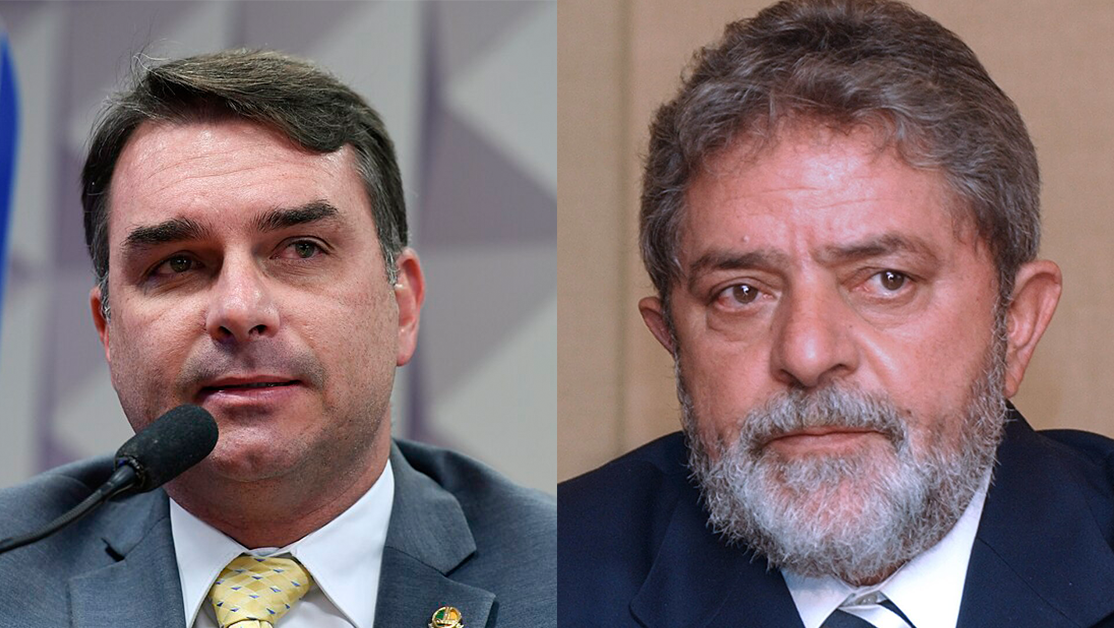
A victory for Bolsonaro, who pledges to follow in his father's anti-environmental footsteps, will no doubt undermine efforts to avoid these impacts. Under Jair Bolsonaro, Amazon deforestation rose by about 60%, while Lula's government announced that deforestation fell by 71% since 2023 – reaching the lowest level since recording began in 1988.
Agribusiness and Congress
Brazil is the largest economy in South America thanks to its supply of agricultural commodities like soybeans and beef to the global market. With China and the EU as its largest trade partners, Brazil’s agricultural exports have also given the country a strategic leg-up in trade and geopolitical influence.
As a result, large agribusiness interest groups enjoy sway over Brazilian trade relations. Associations representing Brazil’s agricultural sector in the World Trade Organization and EU trade talks have privileged large-scale operations over small, domestic-oriented farmers who tend to emphasise sustainable practices. They also have lobbied policymakers in Congress to relax environmental regulations, permitting land clearance, Indigenous land invasion, and deforestation to increase the volume of crops produced for the global market.
At the same time, recent pro-environmental policies are at least partly shaped by incentives to increase market exposure. The EU-Mercosur Agreement seeks to deepen ties between the EU and Mercosur (a bloc of South American nations, including Brazil). While agribusiness interests advocate the EU-Mercosur Agreement in general, they have also criticised the EU Deforestation Regulation (EUDR) as a burdensome measure that protects European markets while imposing costly environmental compliance standards on those seeking to trade with them. Critics, including Lula, have also argued that the deal's environmental conditions imposes uneven burdens on Global South countries by the Global North.
But the EU is not Brazil’s only, or even largest, trade partner: it’s China. Trade with the US pushed China to increase its soybean imports from Brazil, and historically demand for imports have taken priority over adhering to sustainability goals. This may also be shifting as non-trade environmental issues emerge in Chinese regulatory requirements, including the country’s Sustainable Meat Declaration and its interest in engaging with deforestation-free supply chains and reducing emissions.
While agribusiness interests advocate for economic liberalisation in global trade, at home they exert influence as the largest caucus, Bancada Ruralista, in the National Congress. In 2025, the ruralistas successfully passed the General Environmental Licensing Law, dubbed the ‘Devastation Bill’. The law “simplified” environmental governance by easing oversight and accountability for project licenses. Lula vetoed 63 provisions as unconstitutional, but the bloc had enough votes to overturn 56 of those vetoes.
The ruralistas represent a movement driven by the influence of agribusiness in Brazilian legislation and economic priorities. Flávio Bolsonaro’s approach to environmental policy reflects their dominance in national politics. Following the 4 October elections, that dominance was further cemented as parties across the political right will hold 49 of 81 seats in the Senate and enjoy a strong 276-out-of-513-seat base in the Chamber of Deputies.
Brazilian politics is everyone's concern
Brazil risks "ecological suicide" if the anti-environmental agenda (represented by Bolsonaro) wins, Gustavo Faleiros wrote earlier this week. The health of Brazil’s ecosystem is the basis of its economic advantage. Delegates are also at COP17 right now to advance global cooperation in halting and reversing biodiversity loss by 2030, while COP31 starts next month with the news that the world will overshoot the 1.5C global temperature goal set by the Paris Agreement.
Those are the stakes of safeguarding the world’s largest rainforest. But the deeper question is how any environmental effort in Brazil will navigate a Congress favourable to the political right and global negotiations that balance import demands with an urgent need to secure our sustainable future – whether today's victor is Bolsonaro or Lula.